Basement Flooding Cleanup in Tucker, GA
The extraction crew pumps standing water off the slab and pulls wet carpet pad and soaked drywall, then the drying team dries block walls, framing and concrete to a measured dry reference.
☎ (888) 532-4616Say how deep the basement water is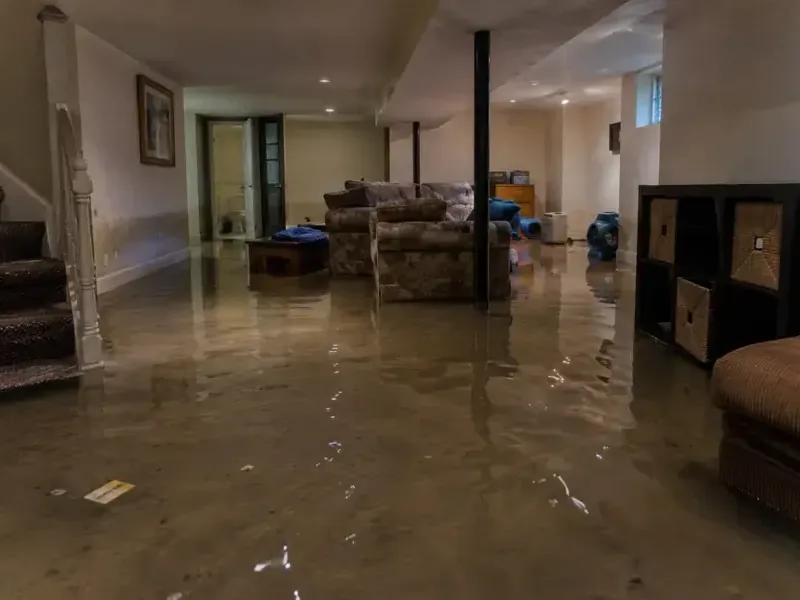
Split-level and multi-story homes in Tucker from the 1970s and 1980s often have a daylight basement, and that lower level is where water ends up: runoff at the grade-level door, a sump pit that stops, a split supply pipe or a water heater giving out. A finished basement adds carpet, pad and drywall that hold water against a slab that is slow to dry.
What basement flooding cleanup includes
- Pump-out of standing water and extraction of carpet and slab
- Removal of wet pad, baseboard and the bottom of soaked drywall
- Moisture mapping of block walls, framing and the slab
- LGR dehumidifiers and air movers running inside containment
Why the source of the water matters
Clean water from a supply pipe or a water heater is Category 1 and can often be dried in place. Runoff through a basement door, creek water or a backed-up floor drain is Category 3, so porous materials it touched come out. Flood risk for an address shows on the Georgia EPD floodplain management page, and Ready.gov covers safety before re-entering a flooded level.
Drying a lower level
Concrete and block release water slowly, and a basement stays cool and damp, so the drying team closes the space and runs LGR dehumidifiers with air movers aimed at the wet walls. Readings go in the log every day, and equipment stays until slab, block and framing read within 2 to 4 points of a dry reference.
How basement flooding cleanup is handled, start to dry
Map and photograph
Meters and thermal imaging trace how far the water wicked.
Pump out and extract
Truck-mounted units clear the slab and the carpet.
Remove and contain
Wet pad and lower drywall come out and containment goes up.
Dry and verify
Daily readings until block, slab and framing reach the dry reference.
First steps for basement flooding cleanup
Shut off power to the basement
If water reached outlets, the furnace or the panel, switch those breakers off from a dry spot.
Stop the source if you can
Close the main valve for a pipe leak. Leave runoff and drain backups to the crew.
Get valuables up and out
Carry boxes, rugs and electronics to a dry floor upstairs.
Photograph the water depth
Shoot the waterline on a wall or stair before anything is pumped.
What does basement flooding cleanup cost in Tucker, GA?
In Tucker, GA, basement flooding cleanup typically runs $2,500 to $15,000, depending on how much of the level got wet, whether it is finished, the water category and how long it sat. Runoff or sewage costs more than clean water.
What moves the number
Ranges are typical, not a quote: the category of water, the square footage, the material class and how fast drying started move the number most. Run the water damage cost calculator for a closer range.
Basement flooding cleanup across Tucker and nearby DeKalb County
The restoration team covers ZIP 30084 and 30085, from Northlake and LaVista Road out to Mountain Industrial Boulevard, Lake Ivanhoe, Midvale Forest, Browning Chase and the homes off Montreal Road.
Nearby coverage reaches Lilburn, Decatur, Dunwoody, Sandy Springs, Johns Creek, Clarkston, Doraville and Stone Mountain.
See every neighborhood, ZIP and nearby city covered ›Related water damage services
Basement Flooding Cleanup questions, answered
How long does basement flooding cleanup take?
Pumping and extraction usually happen on the first visit. Drying a finished basement typically takes three to seven days, longer for a soaked slab or block walls. Equipment stays until the readings say dry.
Is basement flooding cleanup covered by insurance?
Water from a burst pipe or a failed water heater is often covered as sudden and accidental. Surface water from outside usually needs a flood policy, and a sewer backup needs its own endorsement. Check your own policy.
Can carpet be saved during basement flooding cleanup?
With clean water caught early, carpet can sometimes be dried and kept, but the pad usually comes out. With runoff or sewage, carpet and pad both come out.
Why does a basement take longer to dry than upstairs rooms?
Concrete and block hold water and release it slowly, and a lower level stays cool and damp. LGR dehumidifiers and air movers run inside containment to keep pulling moisture out.
When does drywall come out in basement flooding cleanup?
Drywall touched by Category 3 water comes out, cut above the wet mark. With clean water it is often dried in place, unless readings stay high or the paper face is breaking down.
Basement under water? Get the slab dry before the walls wick it up.
Standing water climbs into drywall and framing. The extraction crew pulls it and the drying team dries block and slab.
(888) 532-4616Start the basement pump-out