Storm and Flash Flood Cleanup in Tucker, GA
Runoff from a stalled thunderstorm or a creek over its banks carries soil and sewage. The mitigation team treats it as Category 3 from the start, removes what it touched and dries the structure.
☎ (888) 532-4616Say where the storm water came in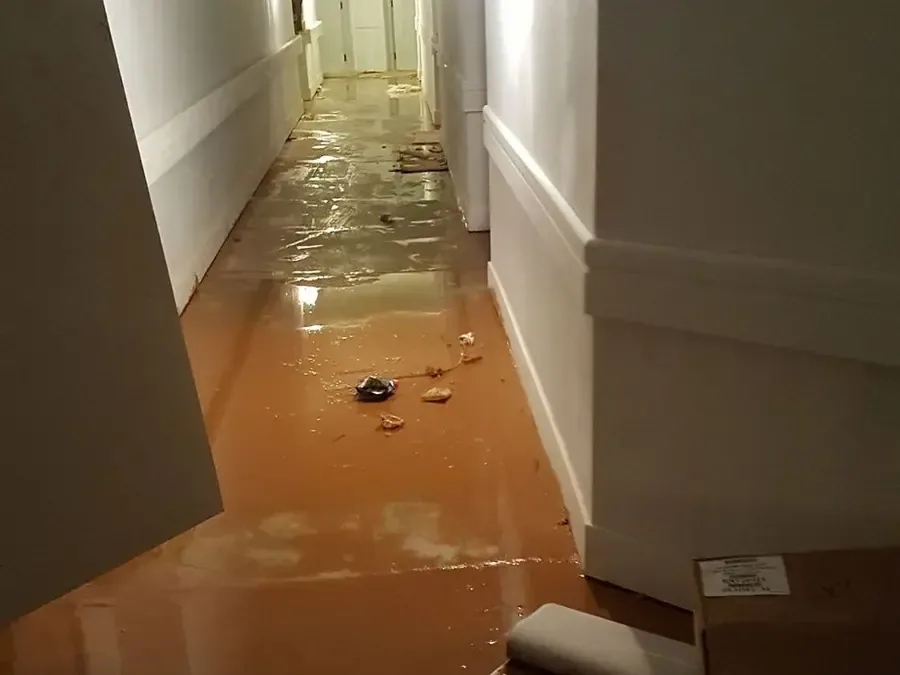
Over a dozen creeks start in Tucker, including Burnt Fork Creek, South Fork Peachtree Creek, Camp Creek and Henderson Mill Creek, and many homes here have a lower level that opens at grade. When a storm stalls, runoff from sloped yards and rising creek water reach those doors first. In September 2009, continuous rain caused 500-year floods across metro Atlanta.
Why storm water is Category 3
Surface runoff and creek water carry soil, fertilizer and sewage from overflowing systems upstream. Carpet, pad, insulation and drywall it touched come out, and hard surfaces get cleaned and treated with an EPA-registered antimicrobial before drying begins.
Flood insurance and flood maps
Most homeowners policies exclude flooding from rising surface water; a separate flood policy usually covers it. FloodSmart explains the National Flood Insurance Program, and FEMA flood maps show the mapped risk for an address. Check your own policy before work starts.
What storm and flood cleanup includes
- Extraction of standing water and mud
- Removal of porous materials the water touched
- Cleaning and antimicrobial treatment of hard surfaces
- Drying of slab, block and framing with daily readings
How storm and flash flood cleanup is handled, start to dry
Assess and protect
PPE, containment and a Category 3 plan.
Extract and muck out
Water and mud off the slab.
Remove and treat
Porous materials out, antimicrobial applied.
Dry and document
Daily readings to the dry reference.
First steps for storm and flash flood cleanup
Stay out of standing water
Storm water can hide live current and sewage.
Cut power from a dry spot
Switch off breakers to the flooded level, or wait for help.
Wear boots and gloves
Treat everything the water touched as contaminated.
Photograph the high-water mark
Record the depth and damage before cleanup.
What does storm and flash flood cleanup cost in Tucker, GA?
In Tucker, GA, storm and flash flood cleanup typically runs $3,000 to $40,000, depending on how deep the water got, how much of the level was finished, the mud and debris left behind and how long the water sat before cleanup.
What moves the number
Ranges are typical, not a quote: the category of water, the square footage, the material class and how fast drying started move the number most. Run the water damage cost calculator for a closer range.
Storm and flash flood cleanup across Tucker and nearby DeKalb County
The restoration team covers ZIP 30084 and 30085, from Northlake and LaVista Road out to Mountain Industrial Boulevard, Lake Ivanhoe, Midvale Forest, Browning Chase and the homes off Montreal Road.
Nearby coverage reaches Lilburn, Decatur, Dunwoody, Sandy Springs, Johns Creek, Clarkston, Doraville and Stone Mountain.
See every neighborhood, ZIP and nearby city covered ›Related water damage services
Storm and Flash Flood Cleanup questions, answered
Is storm and flash flood cleanup covered by homeowners insurance?
Usually not. Rising surface water is typically excluded from homeowners policies and covered by a separate flood policy. Wind-driven rain through a damaged roof is treated differently. Check your own policy.
Why does drywall come out in storm and flash flood cleanup?
Floodwater is Category 3. Drywall, insulation and carpet it touched hold contaminants that cleaning cannot reach, so they are removed to a point above the waterline before drying.
How long does storm and flash flood cleanup take?
Extraction and removal usually take one to two days, and drying a lower level takes another four to eight. Block walls and slabs that soaked longer take more time.
Can a family stay home during storm and flash flood cleanup?
Often, yes, if the flooded level is closed off and the upstairs rooms are dry and have power. Stay off the flooded level until it is cleaned, and keep pets away.
What can be kept after storm and flash flood cleanup?
Hard items such as metal, glass and solid wood can often be cleaned. Upholstered furniture, mattresses, carpet and paper goods soaked by floodwater are usually discarded. Photograph everything first.
Creek or runoff water inside? Get the Category 3 cleanup started.
Storm water carries soil and sewage into a home. The mitigation team removes what it touched and the drying team dries the structure.
(888) 532-4616Start the floodwater muck-out