Water Extraction and Removal in Tucker, GA
Truck-mounted and portable extraction units pull standing water out of carpet, pad, slab and hardwood, the single step that shortens drying the most, before the drying team sets air movers and dehumidifiers.
☎ (888) 532-4616Tell dispatch how many rooms are wet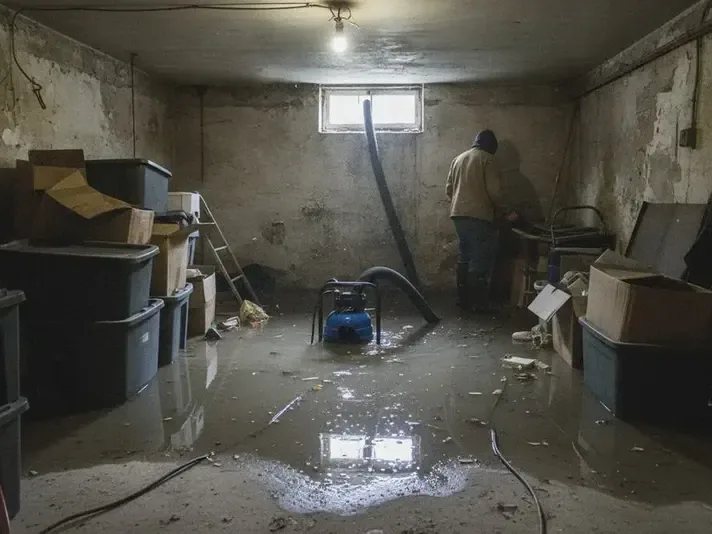
Every gallon pulled out as liquid is a gallon the dehumidifiers never have to evaporate. In Tucker homes, extraction most often means a basement slab, a finished lower level or the carpet beneath a burst pipe, and it starts on the first visit, right after the moisture map.
What water extraction covers
- Standing water on slab, tile and hardwood
- Carpet and pad, with weighted extraction tools
- Water trapped under cabinets and toe kicks
- Pump-out of a flooded basement or a low corner
Truck-mounted versus portable units
Truck-mounted units have the most suction and haul water straight to the truck, which suits a basement or a large carpeted level. Portable extractors reach upstairs rooms, closets and spots a long hose cannot. Many jobs use both. When the water came from a storm or a flood, Ready.gov lists the safety checks before anyone walks in.
After extraction comes drying
Extraction removes the liquid, not the water inside drywall, framing and concrete. The drying team sets air movers and LGR dehumidifiers, logs readings daily and keeps going until materials read within 2 to 4 points of a dry reference. After a leak that ran for a while, the EPA WaterSense leak check shows how to confirm nothing else is dripping.
How water extraction and removal is handled, start to dry
Walk and map
Meters and thermal imaging show where water spread.
Extract
Truck-mounted and portable units pull standing water.
Remove what cannot dry
Saturated pad and damaged materials come out.
Set drying
Air movers and LGR dehumidifiers start the dry-out.
First steps for water extraction and removal
Stop the water at the main
Turn the main valve clockwise if a pipe or fixture is still feeding the leak.
Keep off wet floors near power
Stay clear of outlets and cords the water reached until breakers are off.
Lift what can move
Get rugs, boxes and electronics off the wet floor.
Take photos first
Wide and close shots of every wet room before anything moves.
What does water extraction and removal cost in Tucker, GA?
In Tucker, GA, water extraction and removal with drying typically runs $1,200 to $4,500 for one wet room, $4,000 to $12,000 for a flooded finished basement and more for Category 3 water or several levels.
What moves the number
Ranges are typical, not a quote: the category of water, the square footage, the material class and how fast drying started move the number most. Run the water damage cost calculator for a closer range.
Water extraction and removal across Tucker and nearby DeKalb County
The restoration team covers ZIP 30084 and 30085, from Northlake and LaVista Road out to Mountain Industrial Boulevard, Lake Ivanhoe, Midvale Forest, Browning Chase and the homes off Montreal Road.
Nearby coverage reaches Lilburn, Decatur, Dunwoody, Sandy Springs, Johns Creek, Clarkston, Doraville and Stone Mountain.
See every neighborhood, ZIP and nearby city covered ›Related water damage services
Water Extraction and Removal questions, answered
How fast does water extraction need to happen?
As soon as possible. Water keeps wicking into drywall, framing and subfloor, and mold growth can begin within 24 to 48 hours. Active water is treated as urgent at any hour, 24/7.
Is water extraction the same thing as drying?
No. Extraction pulls out standing and pooled water. Drying removes the moisture left inside materials, using air movers and dehumidifiers over several days until readings reach the dry reference.
Can a shop vac replace water extraction equipment?
A shop vac helps with a small spill, but it cannot pull water out of carpet pad or off a large slab the way truck-mounted units do. Water left behind lengthens drying.
Does insurance pay for water extraction?
When the loss is sudden and accidental, such as a burst pipe, extraction is usually part of the covered mitigation. Flooding and sewer backups are treated differently. Check your own policy.
What happens to wet carpet during water extraction?
Carpet soaked with clean water is extracted and often dried in place, though the pad usually comes out. Carpet soaked by runoff or sewage is removed along with the pad.
Water pooling on carpet or slab? Pull it out before it wicks into the walls.
Liquid water left in place spreads into pad, drywall and framing. The extraction crew removes it and the drying team takes over.
(888) 532-4616Bring the extraction truck out