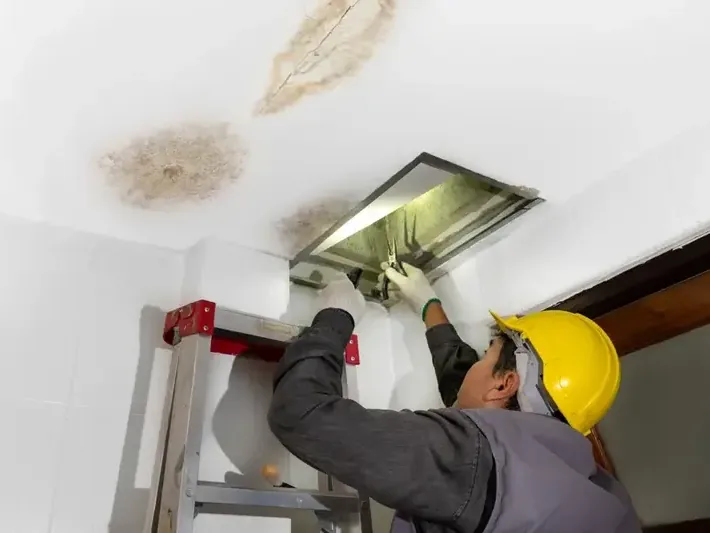
Decatur's historic neighborhoods are full of Craftsman bungalows, Victorian and Tudor homes, and townhouses on tree-lined streets. When rain finds a way through the roof of one of them, the stain on the ceiling is often far from the actual opening.
Key takeaways
- Water from a roof leak travels along roof decking, rafters and the attic floor before it shows on a ceiling, so the stain is not always under the hole.
- Older homes mix several roof shapes, such as porches, dormers and valleys, and every joint is a place a leak can start.
- In a storm, contain the drip, protect belongings and photograph the damage; leave roof work to a roofer.
- The drying team pulls wet attic insulation, opens wet ceilings and dries the rafters, and readings confirm when the materials are dry.
- The city had 8.55 inches of rain in its December 2015 rain week, a reminder of how much water a roof has to shed.
Older homes and varied roofs
Decatur's older neighborhoods include the MAK Historic District, whose Craftsman-style homes date to the early 20th century, and Oakhurst, an early 20th century town annexed by the city and still surrounded by bungalows. The Winnona Park Historic District is on the National Register of Historic Places for its residences, and Ponce de Leon Court is a single street of bungalows.
These homes were built with a variety of roof shapes, and the number of places where two roof surfaces meet is part of the reason leaks are hard to trace.
The city's housing also includes townhouses, and an attached roof adds another path for water to travel. Wherever the roof is shared or joined to a neighboring structure, the first step is working out exactly where the water entered.
How water travels from the roof to the ceiling
A roof leak is a journey. The water enters at one point and then follows gravity and surfaces, which are rarely a straight path.
Through the roof deck and the attic
Water that gets past shingles or flashing soaks the roof deck and then drips onto attic insulation. Insulation acts like a sponge, holding the water against the ceiling below it.
Into the rooms below
Once water passes the ceiling it reaches wall tops, light fixtures and the floor underneath. A leak that began as a drip in one corner can wet a closet, a hallway and a bedroom wall by the time it is found.
Along rafters and across the ceiling
Water often runs down the side of a rafter or a framing member and drips off at a lower point. That is why a ceiling stain can sit several feet from the opening.
Once the ceiling finish is wet, it stains, sags and may eventually fail.
Where leaks tend to start
Most roof leaks begin at a joint or an opening, not in the middle of a plain roof surface. The same spots are worth checking after a storm.
Age alone does not cause a leak. What counts is whether the flashing, the sealants and the shingles have been kept up over the years, and an older roof with many joints simply has more places to check.
- Flashing around chimneys, dormers and wall joints.
- Valleys where two roof surfaces meet.
- Plumbing vents and attic vents.
- Porch roof joints where they meet the main wall.
- Lifted or missing shingles after wind.
- Gutters that overflow and push water behind the edge of the roof.
During the storm: what to do
A roof leak in progress calls for calm, quick action. The goal is to limit what the water reaches while the weather passes.
Roof work is a roofer's job, and climbing onto a wet roof is dangerous.
- Place a bucket under a drip and a tarp under a stain.
- Move furniture and electronics out of the room.
- Keep clear of a bulging ceiling and let a crew release the trapped water safely.
- Turn off a ceiling light that is wet, and keep away from sagging drywall.
- Photograph the stain, the drip and the attic if it can be reached safely.
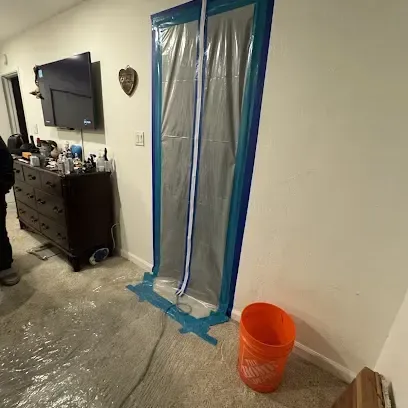
What the drying team does
Once the rain stops, the drying team starts at the top. Water pools in the lowest part of an attic floor and in the cavity above a ceiling, so those are checked first.
Wet attic insulation is pulled, the ceiling is opened where it is wet and the rafters are dried. The steps for roof leak water damage follow this order.
Ceilings and walls below are handled under ceiling leak water damage, and readings confirm when each material is dry.
A roofer repairs the opening. The drying team handles the water inside the house.
Both jobs matter. A dry house under a leaking roof gets wet again with the next storm, and a repaired roof over wet framing leaves the water trapped.
- Moisture readings in the ceiling, walls and attic framing.
- Removal of soaked insulation and wet ceiling material.
- Dehumidifiers and air movers set to dry the attic space and the rooms below.
- Repeat readings until the materials reach a dry reference.
A reminder from December 2015
In the December 2015 rain week, 8.55 inches fell in Decatur, with street floods, overflowing ditches and crawl space flooding. A roof that sheds a normal storm can struggle when a week of rain arrives.
The area is also known for tree-lined streets. Trees shade houses and drop limbs and leaves, and both can open or clog a roof and a gutter.
Records and next steps
Photographs of the stain, the roof opening and the removed materials help with both the roof repair and an insurance claim. Keep them in one folder with the dates.
Ask the roofer to write down what was found and where, since that note, the moisture readings and the photos together tell the full story of the leak.
The Decatur water damage pros can explain what the readings show, and more on the local pages is under Decatur water damage. A matching overview is under roof leak water damage.
Questions
Why is the ceiling stain not under the hole in the roof?
Water follows decking, rafters and insulation before it drips through the ceiling, so the stain can be several feet from where the water entered.
Should a bulging ceiling be poked open?
Stay out from under it. Trapped water can come down all at once, so a crew should release it safely and open the ceiling in a controlled way.
Who repairs the roof, and who dries the house?
A roofer repairs the opening. The drying team removes wet insulation and ceiling material and dries the framing and rooms.
Do older homes have more roof leak risk?
They can, because many mix roof shapes with more joints, valleys and flashing. Each joint is a place a leak can begin.
How is wet attic insulation handled?
Wet insulation is usually removed, because it holds water against the ceiling and does not dry well in place.