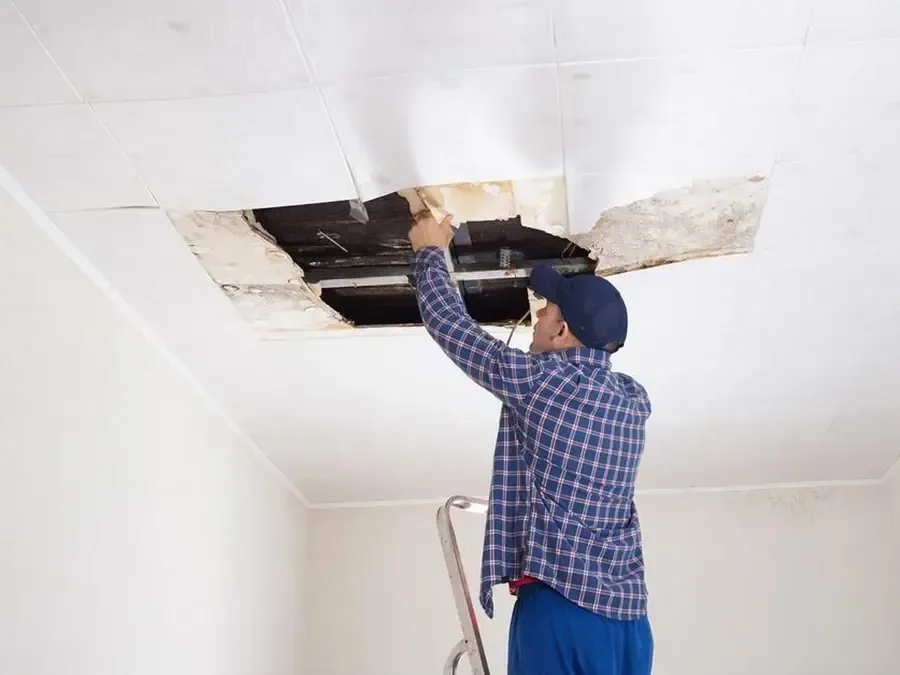
A brown stain or a bulge in an apartment ceiling usually means water is coming from somewhere above. In Dunwoody, where Georgetown mixes many apartments with single-family streets and Perimeter Center adds high-rise living, that source is often a neighbor's unit.
Key takeaways
- A ceiling leak in a multi-unit building often starts in the unit above, so the first move is stopping the water at its source.
- Georgetown was developed in the early 1960s and includes many apartments alongside its single-family subdivisions.
- Dishwashers, washers, supply hoses, tub overflows and HVAC drains are the usual upstairs culprits.
- Wet ceiling drywall is opened and the joist bays are dried, because the water travels above the visible stain.
- Photographs, a short timeline and moisture readings help every party sort out the repair afterward.
Why leaks come down in multi-unit buildings
Georgetown was developed in the early 1960s and borders Chamblee. Along with its single-family subdivisions and its own retail district, it includes many apartments.
Perimeter Center, the edge-city district around the mall, adds high-rise office and residential development. In any building where one home sits above another, water has a short path from a floor to the ceiling below.
Signs the water is coming from above
A ceiling rarely fails all at once. Most show a pattern first, and noticing it early limits how much drywall gets wet.
- A tan or brown ring that grows after a shower, dishwasher cycle or laundry load upstairs.
- Paint that bubbles, peels or looks swollen.
- A ceiling that sags or feels soft near a light fixture.
- Dripping that starts and stops with water use in the unit above.
- A damp smell in a closet or hallway under a bathroom or kitchen.
First steps for the unit below
Act on two fronts at once: contain the water that is coming through, and reach whoever can stop the source.
Contain what is coming down
Move furniture and electronics out from under the stain, and put a bucket or tarp below any drip. Keep people away from a bulging ceiling, because the drywall can let go with a lot of water behind it.
Do not use a ceiling light or fan that is wet or sits under the leak; turn it off at the switch or breaker.
Reach the unit above
Tell the neighbor above, or the property manager or building owner, as soon as the drip is noticed. A running dishwasher or overflowing tub can be shut off in a minute, and every minute it keeps running adds water to the ceiling.
- Ask them to shut off the water to the suspect appliance or fixture.
- Ask whether the main shut-off for that unit can be closed.
- Share photos of the stain with the date written down.
Tracing the source
Finding the source matters because a ceiling dried while the leak continues will be wet again by next week. The crew follows the moisture backward from the stain, not only straight up.
Water travels along joists and pipe runs, so the stain can sit well to the side of the actual leak. A meter and a thermal camera show the path.
- Dishwasher supply hose or drain connection.
- Washing machine hose, pan or drain.
- Toilet supply, wax seal or tub overflow.
- A supply pipe behind a bathroom or kitchen wall.
- An air conditioning condensate drain that backs up.
What the drying team does
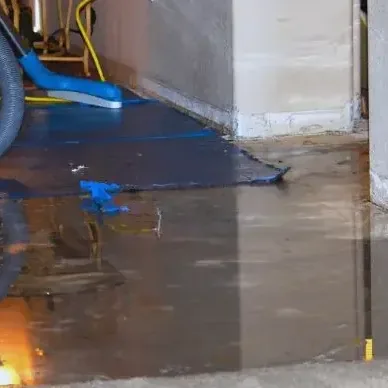
Once the water is stopped, the drying team opens the ceiling where it is wet. Wet drywall and insulation come down, and the joist bays above are dried before anything is closed up.
The steps for ceiling leak water damage follow this order.
In the unit that caused the leak, a leaking washer or dishwasher also soaks floors and cabinets. That work is covered under appliance leak water damage, and both units are often dried together.
- Moisture readings on ceiling, walls and floors in both units.
- Removal of wet drywall and soaked insulation.
- Dehumidifiers and air movers set to dry the cavities.
- A final reading check before repairs begin.
Why a ceiling cavity needs more than a dry stain
A ceiling has layers: drywall, insulation or an air gap, joists and the floor structure of the unit above. Water enters the cavity at one point and then moves along every surface it touches.
Water from a supply pipe or an appliance starts out clean, but it picks up dust and debris as it runs through a cavity. If it sits, the cleanup changes, which is another reason not to wait.
What gets checked
The crew reads the ceiling around the stain, the walls that meet it and the floor above if it can be reached. Readings are repeated until the materials match a dry reference.
- Ceiling drywall around and beyond the stain.
- Insulation sitting on top of the ceiling.
- Joists and the underside of the floor above.
- Wall tops and baseboards where the ceiling meets the wall.
Records and questions that help afterward
Water that crosses from one home to another leads to questions about who pays. Clear records answer many of them without a dispute.
A property manager or building owner usually knows the history of the unit above, and a few direct questions save days. Written answers are best, because they sit beside the photos and the readings in one place.
Keep dated photos, the time the drip was first seen, who was told and when, and the crew's moisture readings. Renters and owners should also look at their own policies and the building's rules, since the right path differs from one building to the next.
Each ceiling leak in a multi-unit building has its own trail of causes and costs. The Dunwoody water damage pros keep the readings that show where the water went, and more detail on the local pages is under the Dunwoody service pages.
- Has the unit above had a leak, a repair or a new appliance recently?
- Where is the shut-off for the water to that unit?
- Who coordinates repairs of the shared ceiling and floor structure?
- Is there a required process for reporting water damage between units?
- Which insurer should be told first, the building's or each resident's?
Questions
Who fixes a ceiling that leaks from the unit above?
It depends on the building and the lease or association rules. The first step is stopping the source; the drying can start at once while the question of who pays is worked out.
Can a stained ceiling just be painted over?
Paint covers the stain but not the moisture. If the drywall and the joist bay above are still wet, the stain returns and the materials can break down.
Why does a ceiling bulge?
Water collects behind the drywall and the sheet bulges under its weight. The ceiling should be treated as unsafe until the water is released and the area is opened.
How is a leak that comes and goes traced?
The crew notes when the drip happens, matches it to water use upstairs and checks suspects one at a time with a meter.
Should the power be turned off in a room with a leaking ceiling?
If water is dripping near a light, a fan or an outlet, switch off the breaker for that room and keep away from the area until it is checked. Water and wiring in a ceiling cavity are a real hazard.
Does a dishwasher leak damage the floor below as well?
Yes, it can. Water from an upstairs appliance often soaks the floor, the cabinets and the ceiling underneath in one event.