
A pipe leak does not always announce itself. Fulton County Water Services describes two simple meter tests that show whether a home is losing water and whether the leak is inside the house or between the meter and the house.
Key takeaways
- Shut off all water use and watch the meter's leak indicator; if it keeps moving, water is leaking somewhere.
- A second method is to read the meter, wait 1 or 2 hours with no water used, and read it again.
- If the indicator keeps moving after the home's main shut-off valve is closed, the leak is outside, between the meter and the house.
- The main shut-off valve is typically in a basement or garage, or outside near an outdoor faucet.
- For homes on Fulton County water, bill adjustments for non-routine leaks are available on qualification with a Leak Adjustment Request Form and a repair statement.
Why a hidden leak matters
A leak inside a wall, under a floor or in a slab can run for a long time before a stain shows up. By then the framing, the subfloor and the drywall may all be wet.
Wet materials that stay wet for 24 to 48 hours can start growing mold, so finding a leak quickly keeps a small repair from becoming a large cleanup.
A meter test takes only a few minutes of attention, which is why it is the first thing to try when something seems off.
- A water bill that rises without a change in habits.
- The sound of water running when every tap is off.
- A damp spot, a soft floor or a stain on a ceiling.
- A section of yard that stays wet in dry weather.
Test one: the meter's leak indicator
Fulton County Public Works runs county water and sewer services, including connections, billing, water testing and leak adjustment requests. Fulton County Water Services describes this first test for homes on county water.
The meter measures every drop that passes into the house, so a leak shows up even when it is hidden in a wall or buried in the yard.
- Shut off every use of water in the house, including the ice maker, dishwasher, washer and irrigation.
- Open the meter box and find the leak indicator on the meter face.
- Watch the indicator for several seconds.
- If it moves, water is passing through the meter, which means a leak somewhere downstream.
Test two: two meter readings
If the indicator is hard to see or the meter has none, a second method works with only the numbers.
Read the meter, wait 1 or 2 hours with no water used and read it again. If the number has changed, water went somewhere.
The wait is the hard part, since a household has to stay off the water for that stretch. Timing it for a quiet part of the day makes it easier.
- Write down the reading, including the small digits.
- Make sure no one flushes a toilet or runs a tap during the wait.
- Compare the two readings; any change is a sign of a leak.
Reading the result: inside or outside
The next step is to find out which side of the house the leak is on. Closing the home's main shut-off valve and watching the indicator again answers that.
The indicator stops
When the indicator stops after the main valve is closed, the leak is inside the house, past the valve. Check toilets, faucets, appliance supplies and the water heater first, then look for hidden leaks in walls and floors.
The indicator keeps moving
Fulton County says that if the indicator keeps moving after the home's main shut-off valve is closed, the leak is outside, between the meter and the house. That part of the supply pipe is underground, so the fix is a plumber's job.
Finding the main shut-off valve
Every household should know where the main valve is before there is a leak. The county says it is typically found in a basement or garage, or outside near an outdoor faucet.
Turning it a quarter turn or a few full turns, depending on the type, cuts the water to the whole house.
- Walk the house once and locate the valve before an emergency.
- Tag the valve so everyone in the household can find it.
- Test that it turns; a stuck valve is better found on a quiet day.
- Know where the individual shut-offs are for the toilets, sinks and the water heater.
When water has already reached the floors or walls
Finding the leak is only half the job. If the water has already soaked a floor, a wall or a ceiling, burst pipe water damage cleanup starts with stopping the water, then water extraction to remove what is standing.
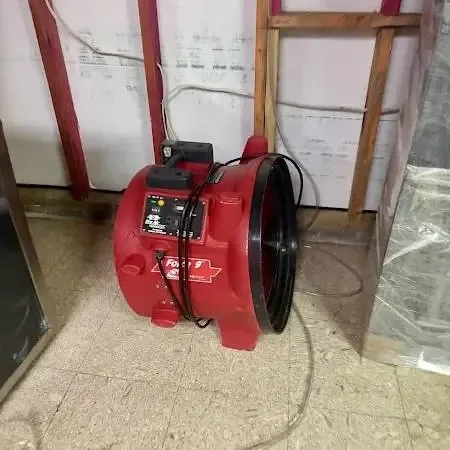
The drying team then opens the wet cavity, removes drywall that cannot be saved and dries the framing with dehumidifiers and air movers. Moisture readings show when the materials are dry.
A local crew can also explain what the readings mean for the repair, and more detail is on the Johns Creek water damage pages.
- Photograph the leak, the wet area and the opened wall before anything is dried.
- Keep the plumber's invoice and repair statement for the county request.
- Note the meter readings from the test and the date they were taken.
- Ask the crew to record moisture readings at the start and the end.
The county bill adjustment
Fulton County offers bill adjustments for non-routine leaks on qualification. The process uses a Leak Adjustment Request Form and a repair statement, so keep the paperwork from the repair.
Not every address in the city is a county water customer, so check the water bill to see who the provider is before filing.
Questions
How do I know if my water meter shows a leak?
Shut off all water use and watch the meter's leak indicator. If it keeps moving, water is leaking somewhere. A second test is to read the meter, wait 1 or 2 hours with no water used and read it again.
What does it mean if the indicator keeps moving after I close the main valve?
Fulton County says that means the leak is outside, between the meter and the house.
Where is the main shut-off valve?
It is typically in a basement or garage, or outside near an outdoor faucet.
Can a slow drip show on the meter?
Often it can. A slow leak moves the indicator slowly, so watch it for longer or use the two-reading method with a longer wait.
Can a leak raise the water bill?
Yes. Water passing through the meter is billed whether it reaches a fixture or leaks into a wall or yard.
Does the county adjust the bill for a leak?
Fulton County offers bill adjustments for non-routine leaks on qualification. A Leak Adjustment Request Form and a repair statement are part of the process.