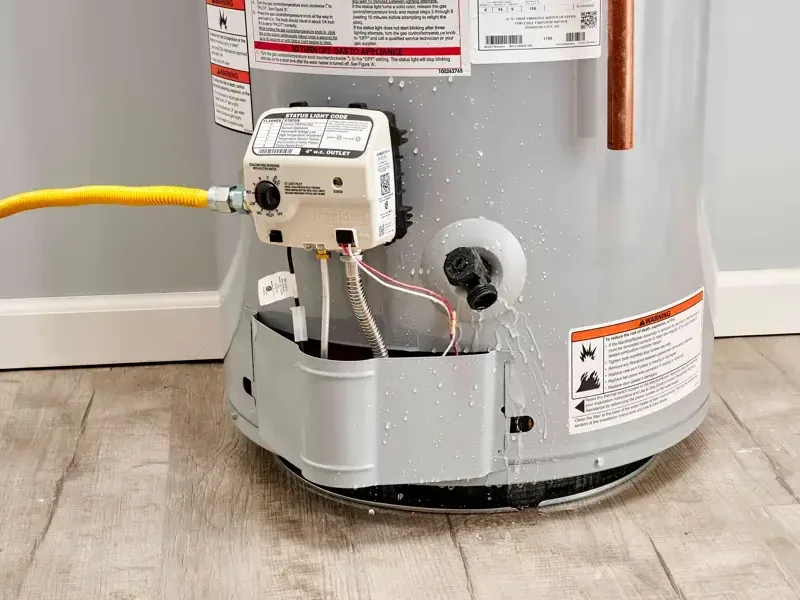
A tank water heater holds enough water to soak a closet, a garage floor or a corner of a finished basement before anyone notices. In Tucker, where the housing runs from 1960s ranches to 1980s multi-story homes, where the heater sits decides where the water goes.
Key takeaways
- Tanks wear out over time, and a failed tank can release its water at once or weep slowly from the base.
- Shut off the cold water supply and the power or gas to the tank, then deal with the water.
- In a multi-story home a tank on an upper level can send water down through the ceiling; in a daylight basement it reaches finished walls and floors.
- Recent-sale median build years run from 1972 in Lehaven to 1982 in Shadow Walk and Cedar Circle, so tank age and finishes vary house to house.
- Extraction, removal of wet insulation and drywall at the base, and drying with readings are the main steps.
Where Tucker homes keep the water heater
Tucker's housing is primarily 1960s and 1970s ranch and split-level homes, plus 1970s and 1980s multi-story homes that often have daylight basements. The tank might sit in a closet, a garage, a utility room or a lower level.
Each place sends water a different way when the tank fails.
Closet and utility room
A tank in a closet sends water into the wall framing, under the door and across nearby flooring. Because closets are small, the water often has nowhere to go but into the walls.
Garage
A garage tank spreads across the slab and soaks cardboard boxes, tools and anything stored on the floor. Water can also run under the wall into a neighboring room.
Daylight basement
In a finished daylight basement the water reaches carpet, baseboard, drywall and sometimes the home's electronics. It can wick up the bottom of a wall in a short time.
Upper floor of a multi-story home
A tank in an upper-floor closet can drip into the ceiling below. The stain on the ceiling may appear long after the first leak.
Signs a tank is starting to fail
Most tanks give some warning before they let go. The signs are easy to miss unless someone looks at the heater on a regular basis.
A quick look every few months, with a flashlight, is enough to catch most of them. The base of the tank and the floor beneath it tell the story.
- A puddle or damp patch at the base of the tank.
- Rust streaks near the bottom or around the fittings.
- Water dripping from the relief valve or its discharge pipe.
- Damp baseboard, drywall or flooring next to the heater.
- Rusty or cloudy hot water at the tap.
Shutting things down safely
The first minutes decide how much water spreads, so the shutdown should be quick and safe. Stopping the water supply matters more than the cleanup that follows.
Every household member should know where the heater's shut-off valve sits and how to reach the breaker or gas valve. Knowing this before a failure turns a panic into a routine.
- Close the cold water supply valve on the pipe feeding the tank.
- Turn off the power at the breaker for an electric tank, or the gas valve for a gas tank.
- Stay out of a flooded room until the power to that room is off.
- Take photos of the tank, the water and any damaged items.
- Move boxes and furniture away from the water.
How the cleanup runs
The extraction crew removes the standing water first, using pumps and wet vacuums. The wet area is then mapped with a moisture meter so the crew knows how far the water traveled.
The steps for water heater leak cleanup follow that order.
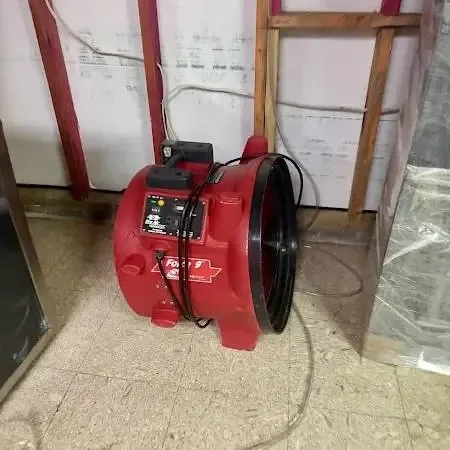
After the first extraction, the crew removes what will not dry in place and sets drying equipment for what will.
- Wet baseboard and the lower strip of drywall are removed.
- Soaked insulation behind the heater is pulled out.
- Pad and carpet that sat in water are lifted, since they dry slowly.
- Dehumidifiers and air movers dry the framing and subfloor.
- Readings are repeated until the materials reach a dry reference.
What the build years say, and what they do not
Georgia MLS data shows median build years of 1972 in Lehaven and 1982 in Shadow Walk and Cedar Circle. Those are medians for homes that recently sold, not a statement about every home or about the tank inside it.
A tank may be original to the house or have been replaced several times. What matters is the age of the tank itself and whether it has been maintained, not the year the neighborhood was built.
Nothing in those build years says what the plumbing is made of, so each house is judged by what the crew finds once the wall is open.
Mistakes that make a tank leak worse
A few common reactions turn a small leak into a larger job. They are easy to avoid once they are known.
Most of them come from hoping the water will dry or the problem will pass.
- Mopping the surface and leaving the wall base or insulation wet.
- Leaving the tank on while it leaks, which keeps feeding water into the area.
- Stacking boxes back against a damp wall after the puddle is gone.
- Waiting for a stain to appear before checking the room below.
- Skipping moisture readings because the floor looks dry.
After the leak: replacement and the next steps
A leaking tank is replaced, not patched. The cleanup and the new heater can be planned together, so the area is dry before the new tank goes in.
Anyone installing a new tank should ask the installer what paperwork applies. A quick look at the water damage cost calculator can help plan the repair side, and water extraction is usually the first step when water has reached a floor.
- Keep the receipt and photos for the insurance claim.
- Ask for the moisture readings at the start and the end of drying.
- Place a drain pan under the new tank if the location allows one.
- Consider a leak alarm on the floor near the heater.
Questions
How do I stop a leaking water heater?
Close the cold water supply valve to the tank and shut off the power or gas. Then protect the area and photograph the damage before cleanup starts.
What does a failing tank look like?
Common signs are a puddle at the base, rust streaks, a dripping relief valve, damp baseboard and rusty hot water.
Does a leak from an upstairs heater damage the ceiling below?
Yes. Water from a tank on an upper floor can travel through the floor into the ceiling below, so the room underneath is checked as well.
Can a leaking tank be repaired?
A tank that leaks from the vessel is replaced. A leaking fitting or valve can sometimes be fixed by a plumber.
How long does drying take after a water heater leak?
It depends on how much water spread and which materials got wet. The crew keeps equipment running until moisture readings come back to a dry reference.