Ceiling Leak Water Damage in Johns Creek, GA
A ceiling stain means water is somewhere above it, whether in the attic, a bathroom or the unit overhead. The crew traces the source first, then opens and dries the wet drywall and joists.
☎ (888) 532-4616Point to the wet ceiling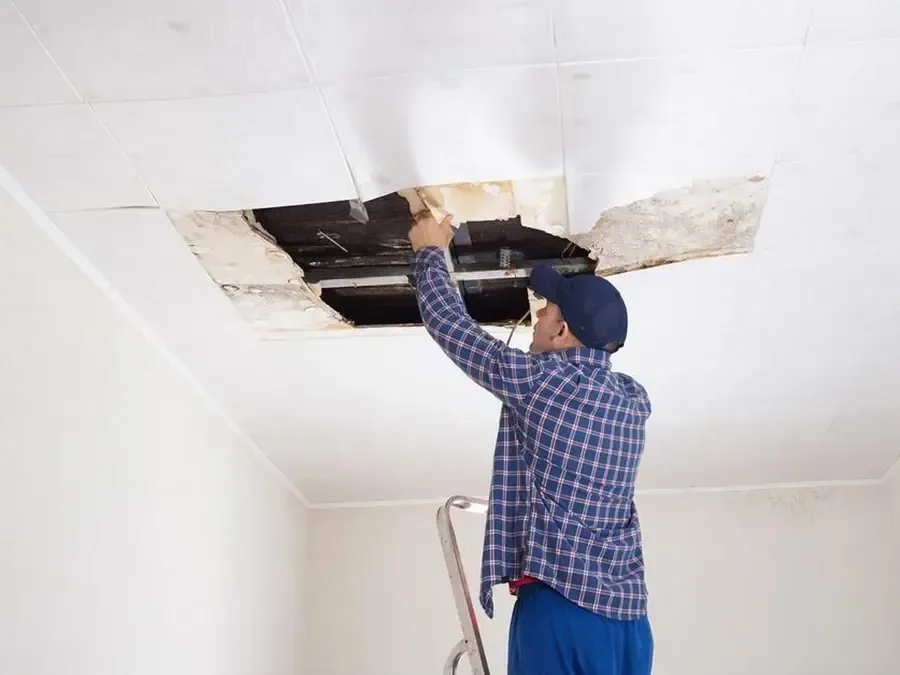
Newer townhomes cluster along the Medlock Bridge and McGinnis Ferry corridors, and in attached homes a ceiling leak can start in the roof, a bathroom or a neighbor's unit. Tracing the source comes before any cutting, because a ceiling dried while the leak continues only fails again.
Opening a wet ceiling
- Sagging drywall is released before it collapses
- Insulation above is checked and removed if soaked
- Joists and subfloor are tested with moisture meters
- Air movers and dehumidifiers dry the cavity
Rooms below the leak
Water that came through a ceiling usually reaches the walls, flooring and furniture underneath. Carpet pad and baseboards tend to hold the water longest, so they are checked early. The mitigation team maps those areas, lifts affected materials and dries them in the same plan, so nothing stays damp behind a finished surface.
Linked problems
When the source is a roof opening, roof leak water damage covers the attic side. A bath or supply failure upstairs is a burst pipe water damage job, and the rest of the drying follows the same readings, whichever level the water started on.
How ceiling leak water damage is handled, start to dry
Trace the source
Meters and thermal imaging follow the water upward.
Release the ceiling
Sagging drywall is cut away safely.
Check the cavity
Joists and insulation are tested for moisture.
Dry and verify
Readings confirm the rooms below are dry.
First steps for ceiling leak water damage
Stay clear of the sag
A bulging ceiling can drop wet drywall, so keep people out of that room.
Catch and photograph
Set out buckets and photograph the stain before anything is moved.
Call and describe it
Say where the stain is and what may sit above it.
Trace, open, dry
The source is found, the wet drywall opened and the cavity dried.
What does ceiling leak water damage cost in Johns Creek, GA?
Ceiling leak water damage in Johns Creek, GA commonly runs from $900 to $12,000 or more. A small stained area stays near the bottom, while a bath leak or a long-running leak across two levels climbs higher.
What moves the number
Ranges are typical, not a quote: the category of water, the square footage, the material class and how fast drying started move the number most. Run the water damage cost calculator for a closer range.
Ceiling leak water damage across Johns Creek and nearby communities
Ceiling leaks are handled across Johns Creek, including attached townhomes along the Medlock Bridge Road and McGinnis Ferry Road corridors, where water can come from a roof or the unit above.
The same service nearby: ceiling leak water damage in Tucker, Dunwoody, Lilburn.
Water damage restoration in Johns Creek › Every town covered ›Related water damage services in Johns Creek
Ceiling Leak Water Damage questions, answered
How is the source found before the ceiling is cut?
Moisture meters and thermal imaging show where the wet area starts, and the attic, bath or unit above is checked. Cutting before tracing risks opening the wrong place while the leak keeps running.
Can a stained ceiling just be painted over?
Not safely. A stain means the drywall and insulation above it have been wet, and painting over damp materials traps moisture and can lead to mold and a repeat stain.
What if the leak came from a neighbor's unit?
In attached townhomes that happens. The drying team documents the damage in your unit and the moisture path, and the cause is a matter between the owners and their insurers.
How long until a wet ceiling dries?
Several days for most ceilings, a little longer where insulation was soaked. The cavity above often dries slower than the surface you can see, so readings decide the end date.
Should I poke a hole in a bulging ceiling?
Releasing trapped water can prevent a sudden collapse, but electrical fixtures and wiring may be wet above. It is safer to keep clear and have the drying team open it with the power off.
A leaking ceiling keeps wetting insulation and rooms below, so tracing the source should happen early.
The mitigation team finds where the water came from, opens the wet drywall and dries the cavity with readings logged.
(888) 532-4616Dry the wet ceiling