Roof Leak Water Damage in Johns Creek, GA
Rain that finds an opening in the roof soaks insulation, ceilings and walls long before a stain appears. The restoration team dries the damage from the attic down and records each reading.
☎ (888) 532-4616Describe the roof leak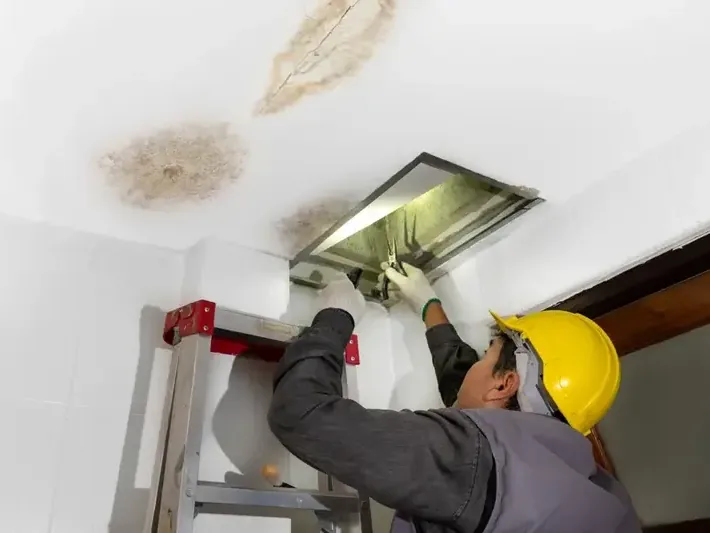
Storms such as the severe weather of April 2017 and the heavy rain of November 2018 show how quickly rain finds a weak spot on a roof. Rain does not stop at the roof deck: it soaks insulation, ceilings and wall cavities on the way down.
Following the water down
- The attic is checked for wet insulation and decking
- Ceiling drywall is opened where it holds water
- Wall cavities below are tested with meters
- Dehumidifiers and air movers run in the rooms below
Why drying starts at the top
Water moves downward, so the highest wet material is dried first, or it keeps feeding the rooms below. Wet insulation and decking are checked early, which is why the attic comes before the ceiling in the plan. Mold can start in damp insulation within a day or two.
Roof repair and cleanup
The roof opening itself is a roofer's job, and the drying team works around temporary covers until the repair is done. For the stained ceiling below, see ceiling leak water damage, and for the wider drying plan, structural drying.
How roof leak water damage is handled, start to dry
Find the entry
Meters trace the water from the stain toward the attic.
Open wet layers
Soaked insulation and ceiling drywall come out.
Dry top down
Air movers and dehumidifiers start in the attic.
Verify below
Readings confirm walls and floors are dry.
First steps for roof leak water damage
Catch the drips
Set out buckets and move belongings from under the stain.
Photograph the stain
Capture the ceiling, the attic access and any wet walls.
Call for the attic check
Describe where the stain is and when the rain came in.
Dry from the top
Attic insulation, ceiling drywall and wall cavities are dried in order.
What does roof leak water damage cost in Johns Creek, GA?
Roof leak water damage in Johns Creek, GA generally runs from $1,000 to $15,000 or more. A single stained ceiling costs the least, while storm damage reaching several rooms pushes the total much higher.
What moves the number
Ranges are typical, not a quote: the category of water, the square footage, the material class and how fast drying started move the number most. Run the water damage cost calculator for a closer range.
Roof leak water damage across Johns Creek and nearby communities
Roof leak calls come from across Johns Creek, from colonial streets near Falls of Autry Mill to townhomes along McGinnis Ferry Road, wherever rain has found a way into the attic.
The same service nearby: roof leak water damage in Tucker, Dunwoody, Lilburn.
Water damage restoration in Johns Creek › Every town covered ›Related water damage services in Johns Creek
Roof Leak Water Damage questions, answered
Why is the ceiling stain far from the roof opening?
Water follows rafters, wires and insulation before it drips through, so the stain can sit several feet from the opening. The attic check finds the actual path.
Who repairs the roof?
A roofer repairs the opening, and the drying team works around temporary covers. Roof repair records help the adjuster, so keep the invoice with the moisture logs.
Can wet attic insulation be dried?
Lightly damp insulation sometimes dries, but compressed or soaked insulation loses its value and is usually replaced. Leaving it in place also keeps the ceiling below damp.
Can a small roof leak do real damage?
Yes. A small gap lets in enough water over repeated storms to soak insulation, stain ceilings and wet wall cavities, often before any dripping is noticed.
Does homeowners insurance cover roof leaks?
Sudden storm damage is often handled differently from long-term wear, and policies vary. Dated photos, the roofer's report and the moisture log help the adjuster decide.
Is it safe to stay under a leaking ceiling?
A bulging or sagging ceiling can drop wet drywall and insulation without warning, so stay clear and keep family and pets out of that room until it is opened and checked.
Water that reached the attic keeps soaking insulation and drywall, so the drying should start before the next storm.
The restoration team dries from the attic down and records readings in every wet layer.
(888) 532-4616Dry the storm leak