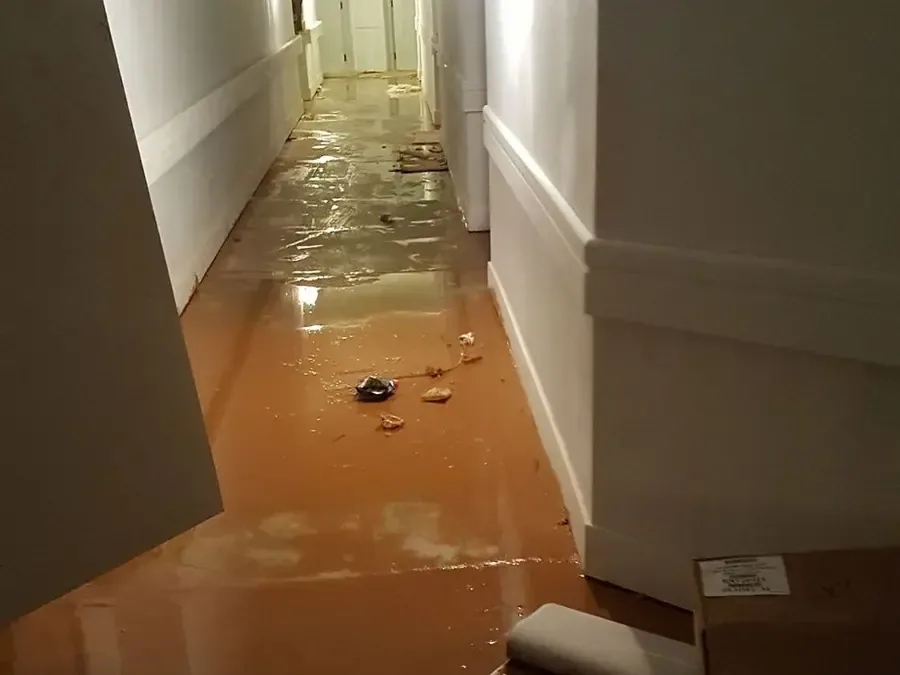
In the late September 2024 storm, Nancy Creek rose to 14.3 feet, which is 3.3 feet above flood stage, and water flowed over the bridge on Windsor Parkway. For homes near a creek, that is the difference between a wet yard and a wet living room.
Key takeaways
- Nancy Creek peaked at 14.3 feet on September 27, 2024, against a flood stage of 11 feet at the Rickenbacker gauge.
- At 2:33 a.m. the city texted 17 residents near the creek to leave, and firefighters told 14 residents of Rickenbacker Road to evacuate.
- Creek water is flood water. It carries soil and debris, so it is cleaned as contaminated, Category 3 water.
- The Chattahoochee River also flooded the pier below Morgan Falls Dam that day, and dozens of trees came down across the city.
- A flooded home needs extraction, removal of soaked porous materials and measured drying, and flood damage is often excluded from standard homeowners policies.
What happened on September 27, 2024
By 2:33 a.m. on September 27, 2024, the city was already telling residents near Nancy Creek to leave. The confirmed details of that storm are below.
- At 2:33 a.m. the city texted 17 residents near Nancy Creek to leave now.
- Firefighters went door to door telling 14 residents of Rickenbacker Road to evacuate.
- Nancy Creek peaked at 14.3 feet, 3.3 feet above flood stage, and water flowed over the bridge on Windsor Parkway, closing it.
- The National Weather Service flood warning covered homes on East Powder Horn Road and Hitching Post Trail upstream, Rickenbacker Way near the gauge and Fairfield Drive downstream.
- The Chattahoochee River flooded the pier below Morgan Falls Dam, and water reached the parking lot beside the city dog park.
How flood stage works
Flood stage is the creek height at which flooding starts to cause problems. Nancy Creek reaches flood stage at 11 feet at the Rickenbacker gauge.
A creek that crests at 14.3 feet is not merely at the edge of its banks; it is well into the range where yards, driveways and low entries take water.
Why a creek can rise quickly
Sandy Springs has a humid subtropical climate and gets about 53.2 inches of rain in an average year. Ground that is already wet cannot absorb a new burst of rain, so runoff races into creeks and pushes them up.
Why the gauge matters to a homeowner
A gauge reading turns a vague worry into a number. When a creek is at or near flood stage, water can already be in the yard, and a home near the bank deserves a close look at every low opening.
Why creek water is different from a pipe leak
A burst pipe sends clean water into a house. A creek sends in soil, leaves, debris and whatever else the water has crossed on the way.
That is why flood water inside a home is treated as Category 3 water, the most contaminated class. The goal is to remove it, clean what can be cleaned and take out what cannot.
- Carpet and pad that sat in flood water are usually removed.
- Insulation and drywall that wicked the water up are cut out above the wet mark.
- Hard floors and framing are cleaned and treated before they are dried.
- Stored boxes and soft items that touched the water are sorted for disposal.
After the water drops: extraction and drying
The first job is extraction. Pumps and wands remove standing water, and the crew works from the lowest point outward so water does not move back across a dried floor.
The details of storm and flash flood cleanup follow this sequence.
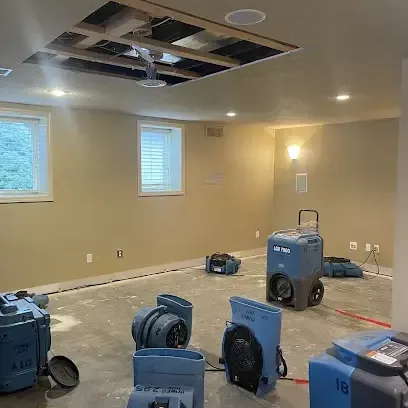
Next, the drying team sets dehumidifiers and air movers and takes moisture readings on framing, subfloor and wall bases. Structural drying continues until the readings match a dry reference.
Sandy Springs has a humid subtropical climate, so walls and framing wet by a flood need measured drying before they are closed up. Readings, not the calendar, decide when the equipment comes out.
When the power goes out too
Dozens of trees came down in the storm, and Georgia Power reported more than 2,300 homes in Sandy Springs still without power the next morning. A home without power loses its lights, its fans and any pump that depends on electricity.
For a home that has a sump pump, a power outage during heavy rain is a risk, since the pump stops just as water rises. A battery backup or a generator is worth discussing with a plumber before the next storm.
If creek water is near the house
The hours when a creek is rising are not the time for cleanup. They are the time for safety, and for following the instructions of the city and emergency crews.
When the water has dropped and it is safe to go back in, the order of work matters, and the first call is for extraction. More on the local response is in the Sandy Springs water damage pages, and a general overview of storm flood cleanup covers the same steps.
While the water is rising
- Leave when the city or firefighters say to leave.
- Do not walk or drive through moving water.
- Keep a phone charged and stay away from downed power cables.
- Take the medicine, documents and pets that cannot be replaced.
After the water drops
- Wait for the all clear before going back in.
- Wear boots and gloves, because the mud and water are contaminated.
- Photograph everything before moving it.
- Keep children and pets away from the affected rooms.
Insurance, records and checking risk
Flood damage is often excluded from a standard homeowners policy, and flood insurance is a separate product. Reading the policy wording before a storm is better than reading it during one.
Georgia's flood map site, georgiadfirm.com, lets an owner enter an address and see a property-specific flood risk snapshot. Photos, moisture readings and a list of removed items help whichever claim applies.
- Photograph the water level on walls and any items before they are moved.
- Keep a list of what was removed and where it was.
- Ask the crew for the start and end moisture readings.
- Save receipts for any emergency work.
Questions
How high did Nancy Creek get in September 2024?
It peaked at 14.3 feet on September 27, 2024, which is 3.3 feet above its flood stage of 11 feet at the Rickenbacker gauge.
Which road was closed by the creek?
Water flowed over the bridge on Windsor Parkway and closed it.
What does flood stage mean?
It is the water height at which flooding begins to affect the area. For Nancy Creek at the Rickenbacker gauge, that is 11 feet.
Is creek flood water treated differently from rain leaks?
Yes. Creek water is contaminated, so the cleanup removes soaked porous materials and treats surfaces, then dries the structure.
Does homeowners insurance cover flood damage?
Often it does not. Flood damage is commonly excluded from a standard policy, so check the wording and ask the insurer about flood coverage.