Storm and Flash Flood Cleanup in Sandy Springs, GA
When a creek rises or a hard storm pushes muddy water indoors, the restoration team pumps it out, removes silt and soaked materials, and dries what is left in Sandy Springs homes.
☎ (888) 532-4616Report storm water in the home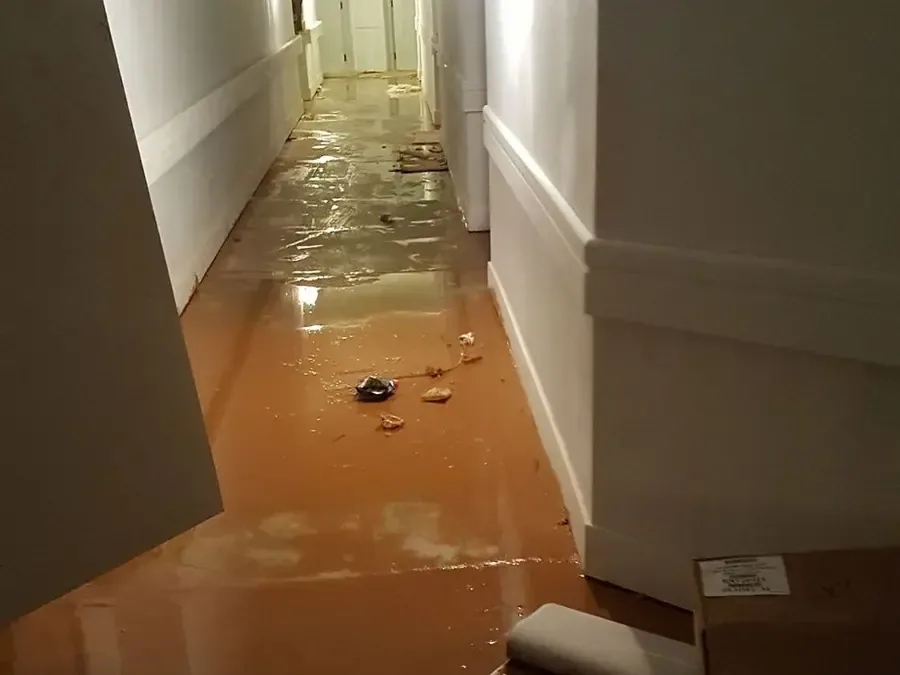
Floodwater is not the same as a plumbing leak. It arrives with mud, bacteria and debris, and it leaves a film on everything it covers, so storm flood cleanup is a removal and sanitizing job as much as a drying job.
What the cleanup removes
- Floodwater and standing mud
- Silt left on floors and wall bases
- Carpet, pad and soaked porous materials
- Debris that floated or washed in
Creek and river rises
Nancy Creek reaches flood stage at 11 feet, and it peaked at 14.3 feet on September 27, 2024, when water flowed over a bridge and closed it. That day the Chattahoochee River flooded the pier below Morgan Falls Dam. Storms like that show how fast floodwater can reach homes, which is when basement flooding cleanup becomes urgent.
Cleaning and drying after the flood
After the pump-out, the crew shovels or vacuums silt, bags contaminated debris and removes carpet, pad and any wallboard the water touched. Hard surfaces are cleaned and sanitized, then air movers and dehumidifiers dry the framing and floors, the same method used in water extraction. Meter readings are logged each visit, so the insurance adjuster can see the work from first extraction to the final dry check.
How storm and flash flood cleanup is handled, start to dry
Pump out
Pumps clear the floodwater and standing mud.
Remove silt
Mud, debris and soaked materials are hauled out.
Sanitize
Hard surfaces are cleaned and treated.
Dry and verify
Equipment runs until readings are normal.
First steps for storm and flash flood cleanup
Stay out of floodwater
Floodwater can carry sewage and chemicals, so keep family and pets clear.
Photograph the damage
Record the water mark on walls and ruined belongings first.
Turn off the power
Cut power to flooded areas only if the panel is dry.
Call for pump-out
Say how deep the water got and whether it looked muddy.
What does storm and flash flood cleanup cost in Sandy Springs, GA?
Storm flood cleanup commonly runs $3,000 to $7,500 for shallow water in one area, $7,500 to $18,000 for a finished lower level, and $18,000 to $40,000 or more when deep water covers several rooms.
What moves the number
Ranges are typical, not a quote: the category of water, the square footage, the material class and how fast drying started move the number most. Run the water damage cost calculator for a closer range.
Storm and flash flood cleanup across Sandy Springs and nearby communities
The response team works in neighborhoods along Nancy Creek, near the Chattahoochee River in Riverside and across the rest of the city, wherever storm water has come indoors.
The same service nearby: storm and flash flood cleanup in Tucker, Dunwoody, Johns Creek.
Water damage restoration in Sandy Springs › Every town covered ›Related water damage services in Sandy Springs
Storm and Flash Flood Cleanup questions, answered
Is floodwater from a creek contaminated?
Yes. Creek and storm water carries soil, bacteria and runoff chemicals, so it is treated as contaminated and porous materials it soaked, such as carpet, pad and drywall, are usually removed.
What is the difference between storm flooding and a leak?
A leak releases clean water in a limited place, while storm flooding brings outside water with silt and bacteria across whole rooms, so it needs removal and sanitizing as well as drying.
Should flooded belongings be kept?
Hard items such as metal, glass and sealed plastic can often be cleaned, while upholstered furniture, mattresses and paper goods touched by floodwater are usually discarded; photograph them first.
Can storm damage be handled after the water recedes?
Yes, but waiting lets silt dry onto surfaces and moisture soak further into framing, so cleanup is easier and the loss smaller when pump-out and drying begin as soon as it is safe.
Does standard insurance cover flood damage?
Standard homeowners policies often exclude rising floodwater, which is usually covered under a separate flood policy, so the policy language decides; documentation from the start helps either way.
Floodwater leaves mud and bacteria behind, so the cleanup should start before it dries into the surfaces.
The response team pumps out the water, removes silt and ruined materials, sanitizes what stays and dries the structure with documented readings.
(888) 532-4616Call about the storm water