Basement Flooding Cleanup in Sandy Springs, GA
When heavy rain or runoff pushes water into a lower level, the extraction crew clears it, removes soaked finishes and dries the space in Sandy Springs until readings confirm it is done.
☎ (888) 532-4616Report a flooded lower level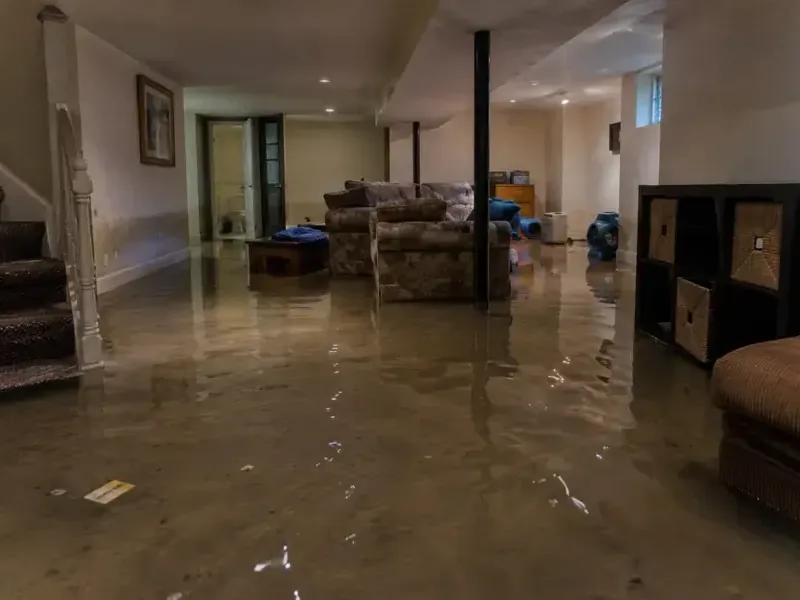
Water does not need a flooded street to reach a lower level. Runoff can come through a low doorway, a window well or a wall crack, and once it pools it climbs into drywall, framing and flooring. For homes that have a basement or lower level, cleanup starts with removing that water and checking how far it traveled.
What the cleanup covers
- Pump-out of standing water and silt
- Removal of soaked carpet, pad and drywall
- Cleaning and sanitizing where runoff entered
- Air movers and dehumidifiers on what stays
Why heavy rain matters here
The city averages about 53.2 inches of rain a year, and heavy storms test every drain, gutter and window well on a property. During the late September 2024 storm Nancy Creek climbed past flood stage, a reminder that creek-side homes can take on water quickly. Even modest inflow soaks flooring and wall bases.
How a lower level is dried
After the pump-out, the drying team removes carpet, pad and any wallboard that wicked water upward, then checks the framing and floor with meters. Air movers and dehumidifiers run in a closed space so the moisture has nowhere to go but out. If the water carried silt or sewage, surfaces are cleaned and sanitized, as described in sewage backup cleanup, before drying begins. Daily readings decide when the equipment can come out, and the final set is saved for the insurance file.
How basement flooding cleanup is handled, start to dry
Safety check
Power, gas and water service to the area are checked before anyone enters.
Pump and extract
Pumps and wands remove standing water and settled silt.
Strip and sanitize
Soaked finishes come out, and surfaces touched by runoff are cleaned.
Dry and confirm
Air movers and dehumidifiers run until meters read normal.
First steps for basement flooding cleanup
Stay out of the water
Keep clear of a flooded lower level until its power is off, because water and live outlets can shock.
Find where it entered
Note the doorway, window or wall where water came in, and photograph the water level on the walls before it drops.
Lift valuables up
Move boxes, electronics and documents to a higher floor.
Call for pump-out
Share the depth, the rooms affected and whether the water looked muddy.
What does basement flooding cleanup cost in Sandy Springs, GA?
Cleanup typically runs $2,500 to $5,000 for an unfinished area or one room, $5,000 to $10,000 for a finished lower level, and $10,000 to $15,000 or more when runoff or sewage is involved.
What moves the number
Ranges are typical, not a quote: the category of water, the square footage, the material class and how fast drying started move the number most. Run the water damage cost calculator for a closer range.
Basement flooding cleanup across Sandy Springs and nearby communities
The response team serves homes near Nancy Creek, along Roswell Road, Johnson Ferry Road and the Georgia 400 corridor, and across Riverside, North Springs and the Dunwoody Panhandle.
The same service nearby: basement flooding cleanup in Tucker, Dunwoody, Johns Creek.
Water damage restoration in Sandy Springs › Every town covered ›Related water damage services in Sandy Springs
Basement Flooding Cleanup questions, answered
Is a flooded lower level an emergency?
Yes. Water keeps wicking into drywall and framing, outlets may be underwater, and mold can take hold within a day or two, so pump-out and drying should start as early as possible.
Can water get in without a flooded street?
Yes. Gutters, window wells, wall cracks and low doorways can all let in runoff during a hard storm, and groundwater can rise against a foundation after days of heavy rain.
What gets thrown out after basement flooding?
Carpet pad, wet insulation and drywall that wicked water upward usually go, along with anything touched by sewage, while solid wood and metal can often be cleaned and dried.
What if the water looks muddy or smells?
Muddy or foul water is treated as contaminated. The crew wears protective gear, removes porous materials it soaked and sanitizes hard surfaces before drying.
How long until a lower level is dry?
Many jobs need equipment for several days, and thick framing or dense flooring can take longer. The drying team logs meter readings daily and removes equipment only when they match normal levels.
Wet drywall and flooring cost more to replace the longer water sits, so pumping comes first.
The response team pumps out the water, removes what cannot be saved and dries the rest with equipment, then documents the readings for the claim.
(888) 532-4616Clear the water downstairs