Basement Flooding Cleanup in Dunwoody, GA
Heavy Georgia rain that fills roads can also push water into a lower level. The crew pumps it out, removes wet materials and dries the space until readings are normal.
☎ (888) 532-4616Report the lower level water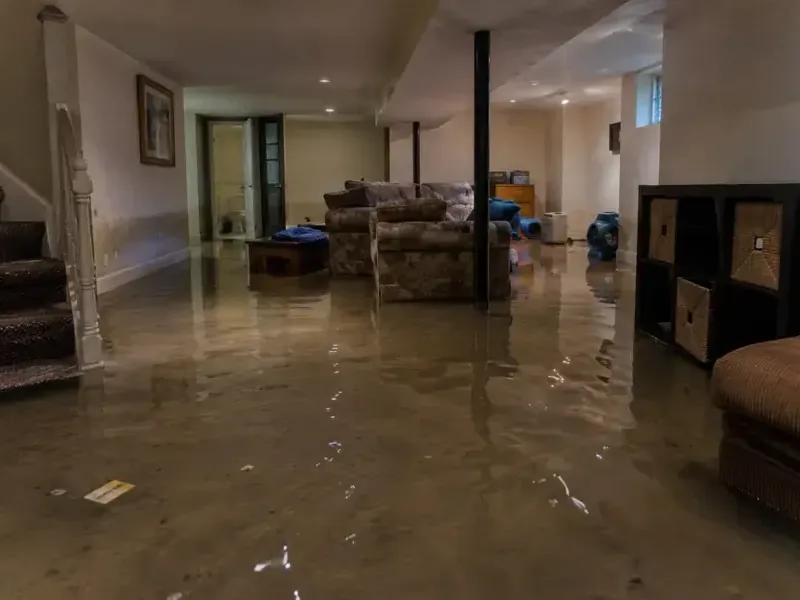
A lower level takes on water in a few ways: rain that overwhelms the ground and drains outside, a stalled sump pump, a burst pipe or a sewage backup. The cause matters, because it decides how the water is classified and what has to be removed. Wherever a house has a lower level, it is the first place heavy rain tends to show up.
How a lower level fills
- Rain collecting against the foundation and seeping in
- A sump pump that stalls or is overwhelmed
- A broken supply pipe or water heater tank
- A backup through a floor drain
What the cleanup removes
Standing water goes first, then anything that has wicked it up: carpet, padding, baseboards and the lower part of drywall. Surfaces that can dry in place are treated and left. Hard floors and framing are metered, and the room is dried with air movers and dehumidifiers until the readings match a dry reference. A stalled pump is covered in more detail under sump pump failure cleanup.
Heavy rain and the lower level
On the evening of Tuesday, August 29, 2023, flash flooding briefly closed westbound I-285 near Ashford Dunwoody Road until the drains cleared. Rain at that rate can overrun the ground and drains around a house too, so any lower level should be checked after a downpour. Storm and flash flood cleanup covers water that comes in from outside.
How basement flooding cleanup is handled, start to dry
Find the source
Rain, a failed pump, a pipe or a drain: the cause sets the classification and the plan.
Pump and extract
Standing water and soaked padding come out first.
Remove and open
Damaged drywall and flooring are cut away so hidden cavities can dry.
Dry to the numbers
Equipment stays until floors and walls read dry on the meter.
First steps for basement flooding cleanup
Stop the inflow
Shut the supply valve if a pipe is the cause, switch off power to the wet area and keep out of standing water.
Pump it out
Submersible pumps and extractors lower the water in stages so walls and floors are not stressed all at once.
Remove wet materials
Soaked carpet, padding and damaged drywall are cut out and bagged, which also opens the cavity for air.
Dry and verify
Air movers and dehumidifiers run until meter readings on floors and walls match a dry reference.
What does basement flooding cleanup cost in Dunwoody, GA?
Cleanup of an unfinished space or one room usually runs $2,500 to $5,000. A finished lower level costs $5,000 to $10,000, and runoff or sewage can reach $10,000 to $15,000+ once removal and sanitizing are added.
What moves the number
Ranges are typical, not a quote: the category of water, the square footage, the material class and how fast drying started move the number most. Run the water damage cost calculator for a closer range.
Basement flooding cleanup across Dunwoody and nearby communities
The crew works lower level floods across Dunwoody, from Tilly Mill and Dunwoody Village to Redfield, Winters Chapel, Perimeter Center and the communities around Brook Run.
The same service nearby: basement flooding cleanup in Tucker, Sandy Springs, Johns Creek.
Water damage restoration in Dunwoody › Every town covered ›Related water damage services in Dunwoody
Basement Flooding Cleanup questions, answered
Does heavy rain always mean a flooded lower level?
No, but it can. Rain that overruns the ground and drains outside can find its way in, which is why the crew checks lower floors after a major downpour.
Can carpet in a flooded lower level be saved?
Sometimes, if the water was clean and caught early. Padding rarely survives, and carpet that sat in dirty water is usually removed and replaced.
What if the water came back up through a drain?
A drain backup is contaminated water. The area is cleaned and sanitized under stricter rules, as described under sewage backup cleanup.
How can anyone tell the walls are really dry?
Meters read moisture inside drywall, framing and floors. The crew compares those readings with unaffected areas and only removes equipment when they match.
Should a household dehumidifier be run first?
A household unit helps a little, but it cannot handle standing water or wet drywall. Removing water and wet materials first lets professional equipment work as intended.
Does insurance cover a flooded lower level?
It depends on the cause. Sudden pipe or appliance water is often covered, while outside flood water may need a separate flood policy, so read the policy and ask the carrier.
Lower level taking on water? Get it pumped and dried.
Call any hour and say how deep the water is, what caused it and what the floor is made of. That helps the crew bring the right pumps.
(888) 532-4616Start the pump out