Structural Drying and Dehumidification in Dunwoody, GA
After the water is out, moisture stays locked in framing, subfloors and drywall. Air movers and dehumidifiers pull it out steadily while meters track the progress until the whole building reads dry.
☎ (888) 532-4616Report the wet structure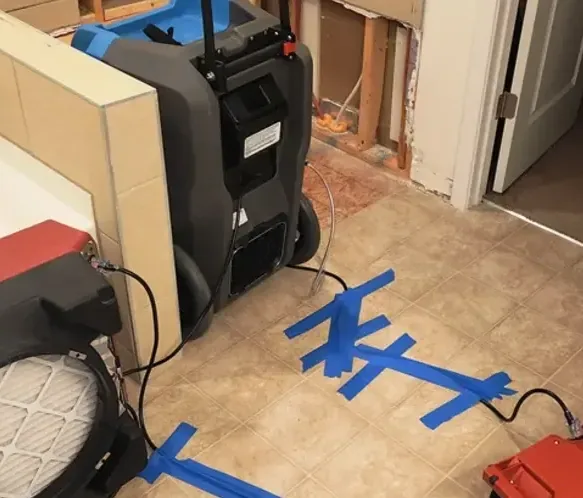
Extraction removes the water that shows. Structural drying removes what the building absorbed: moisture inside framing, subfloors, drywall and flooring that keeps feeding damage long after the surface looks fine. That hidden moisture is what the equipment is there for.
Older and newer construction
Median build years of recently sold homes in ten Dunwoody communities run from 1967 to 2002. Older framing, subfloors and drywall can hold moisture differently from newer construction, so the crew meters each material and adjusts airflow and dehumidifier placement room by room instead of using one setting for the whole house.
How the equipment works
- Air movers push dry air across wet surfaces
- Dehumidifiers pull moisture out of the air
- Wall cavities are opened or vented where moisture is trapped
- Meters track every material until it reaches a dry reading
After any water event
Drying follows any water event, from a split pipe to storm water. The order is always the same: stop the source, extract the standing water, then dry. See water extraction for the first phase and basement flooding cleanup when a lower level is involved.
How structural drying and dehumidification is handled, start to dry
Map it
Meters show wet materials.
Set it up
Equipment goes where moisture is.
Track it
Daily readings steer adjustments.
Finish it
Equipment leaves when readings match dry.
First steps for structural drying and dehumidification
Map the moisture
Meters and imaging show which materials are wet and how wet.
Set the equipment
Air movers and dehumidifiers go where the wet surfaces are.
Monitor daily
Readings are taken each visit and equipment is adjusted.
Remove at dry
Equipment leaves only after readings match a dry reference.
What does structural drying and dehumidification cost in Dunwoody, GA?
Drying a single room commonly costs $1,000 to $3,000. A lower level runs $3,000 to $8,000, and several levels or dense materials such as hardwood can reach $8,000 to $16,000+ because they take longer to release moisture.
What moves the number
Ranges are typical, not a quote: the category of water, the square footage, the material class and how fast drying started move the number most. Run the water damage cost calculator for a closer range.
Structural drying and dehumidification across Dunwoody and nearby communities
Drying work covers all of Dunwoody, from late 1960s communities such as Mount Vernon Springs to newer ones like Winter Rose and Ashworth, plus the offices and apartments around Perimeter Center and Georgetown.
The same service nearby: structural drying and dehumidification in Tucker, Sandy Springs, Johns Creek.
Water damage restoration in Dunwoody › Every town covered ›Related water damage services in Dunwoody
Structural Drying and Dehumidification questions, answered
How long does structural drying take?
Most rooms need several days, and dense materials or several levels take longer. The calendar does not decide it; moisture readings do.
Why run dehumidifiers instead of opening windows?
Outdoor air in Georgia can be as humid as indoor air, so open windows may not help. Dehumidifiers pull moisture out reliably regardless of the weather.
Will the equipment be loud?
Yes, it runs continuously and makes noise and heat, but it is temporary and needs to stay on for drying to work.
Can drying prevent mold?
Drying quickly removes the conditions mold needs. Wet materials left more than a day or two can start to grow it, which is why equipment goes in promptly.
Does an older house dry differently from a newer one?
It can. Materials and construction differ, so the crew meters each one. Median build years of recent sales in town run from 1967 to 2002, which is a wide spread.
Does insurance pay for drying?
Usually, as part of a covered water claim. The daily logs show the insurer why equipment stayed as long as it did.
Damp framing or floors? Get them dried to the numbers.
Call any hour and describe what was wet, how long it sat and what the floors are made of. That sets the equipment plan.
(888) 532-4616Set up the dehumidifiers