Sewage Backup Cleanup in Lilburn, GA
Sewage that backs up through a drain carries bacteria into everything it touches. The extraction crew works safely in protective gear, removes porous materials, then cleans, sanitizes and dries the whole affected area.
☎ (888) 532-4616Report the sewage backup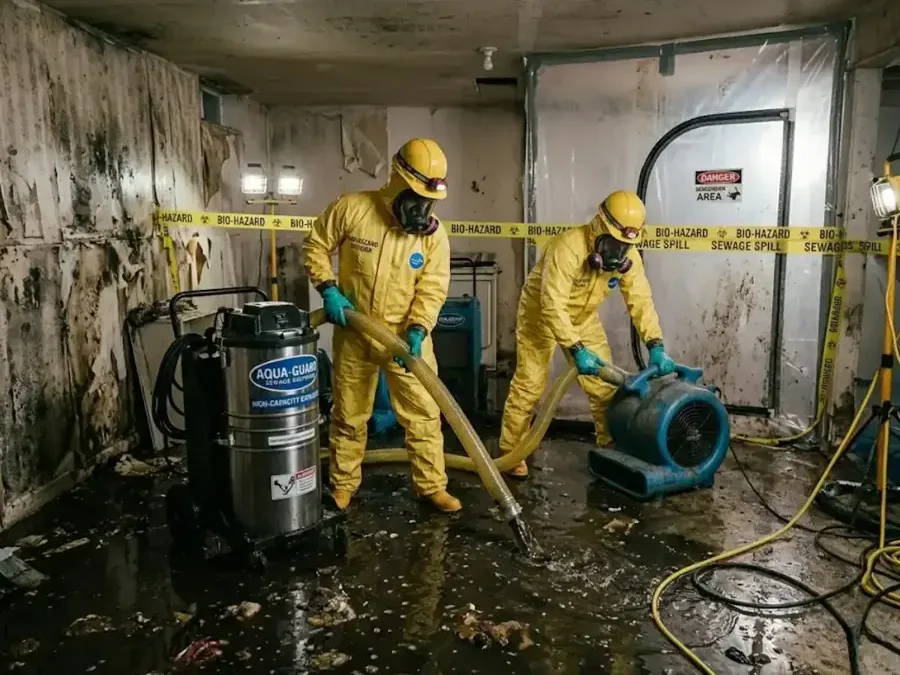
In Lilburn, the property owner maintains the private sewer lateral that connects a home to the public sewer, out to the edge of the right-of-way. When that pipe or the main backs up, sewage comes up through the lowest drain, and everything it touches has to be treated as contaminated.
Who maintains what
- The owner maintains the private lateral out to the edge of the right-of-way
- Gwinnett County maintains the cleanout at the right-of-way
- A cleanout closer to the home is part of the private lateral
- Sewer overflows are reported through Gwinnett County
Backwater valves and the code
Georgia plumbing code requires a sanitary backwater valve when the lowest plumbing fixture, such as a basement toilet or sink, is below the next upstream manhole, and the owner maintains the valve. Gwinnett County says that if a required valve is missing, the County is not responsible for damage from a sewage backup in the main. A plumber can confirm whether a given home needs one.
Cleanup and drying
The crew wears protective gear and extracts the water first. Carpet, padding, insulation and drywall that sewage reached are removed, since they cannot be made safe. Hard surfaces are cleaned and sanitized, then air movers and dehumidifiers dry the structure with readings logged. The first step is water extraction with contamination controls, and the last is structural drying.
How sewage backup cleanup is handled, start to dry
Assess
The crew checks the source and spread.
Extract in gear
Contaminated water is pumped out.
Remove and clean
Porous items come out and surfaces are sanitized.
Dry and verify
Equipment runs to dry readings.
First steps for sewage backup cleanup
Leave the area
Keep children and pets out of the rooms.
Stop using the drains
Do not run sinks or toilets until the blockage is cleared.
Avoid contact
Do not touch the water or wet items without gloves and boots.
Call a plumber
A plumber clears the blockage while the crew handles cleanup.
What does sewage backup cleanup cost in Lilburn, GA?
Sewage backup cleanup in Lilburn, GA usually runs from $2,500 to $30,000. The total follows how much area the sewage reached, whether it soaked finished materials, how deep the backup ran and how long it sat.
What moves the number
Ranges are typical, not a quote: the category of water, the square footage, the material class and how fast drying started move the number most. Run the water damage cost calculator for a closer range.
Sewage backup cleanup across Lilburn and nearby communities
The extraction crew works ZIP 30047 and its neighborhoods, from Old Town Lilburn along Lawrenceville Highway to Hanarry Estates, Lake Lucerne Estates, Stonemont, Rivercliff and Brookwood Enclave.
The same service nearby: sewage backup cleanup in Tucker, Johns Creek, Dunwoody.
Water damage restoration in Lilburn › Every town covered ›Related water damage services in Lilburn
Sewage Backup Cleanup questions, answered
Who is responsible for a sewer lateral?
Gwinnett County says the property owner maintains the private lateral out to the edge of the right-of-way, including the connection to the public sewer. The County maintains the cleanout at the right-of-way.
Does homeowners insurance cover a sewage backup?
Often only with a water backup endorsement added to the policy. Gwinnett County also advises considering a lateral inspection and an upper lateral rider on homeowners insurance, so ask the carrier what the policy includes.
Where is a sewer overflow reported?
The city's stormwater page tells residents to contact the Gwinnett County Dispatch Center to report a sewer service overflow, a water service interruption or an illicit discharge. The restoration crew handles the cleanup inside the home.
What if a backwater valve was missing?
Gwinnett County says it is not responsible for damage from a backup in the main when a required backwater valve is missing. The owner maintains the valve, so a plumber can check whether the home needs one.
Can anything be saved after sewage contact?
Hard surfaces such as tile and sealed concrete can usually be cleaned and sanitized. Carpet, padding, insulation and drywall that sewage reached are removed because they cannot be made safe.
Sewage contaminates everything it reaches
Porous materials soak up contaminated water quickly. The extraction crew removes the water and the affected materials, then cleans and dries the area to a safe standard.
(888) 532-4616Clean up the backup